
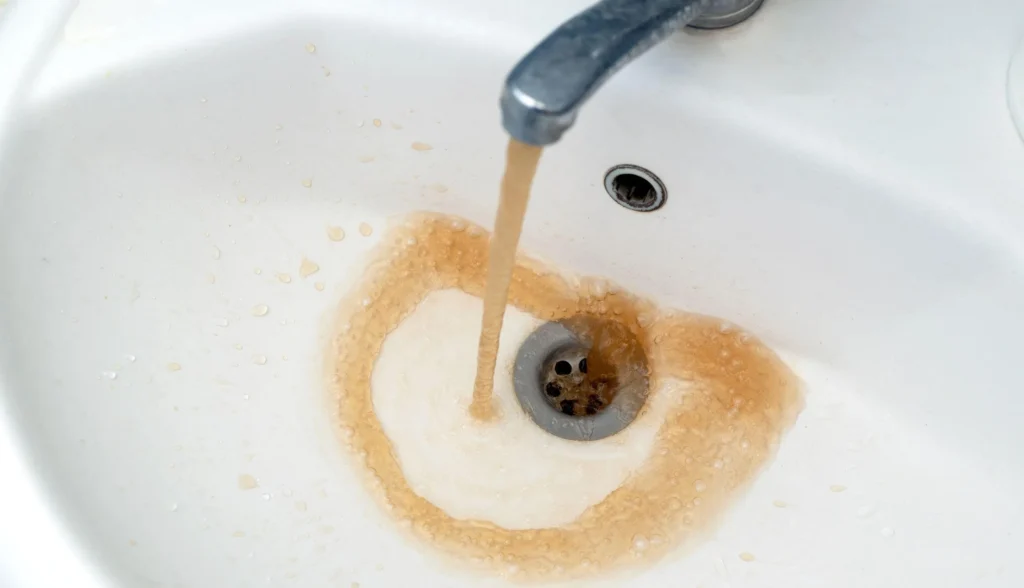
Why Brown Water in Jersey City Multifamily Buildings Deserves Real Follow Up is a practical question, not just a search phrase. In Jersey City, a household water concern often begins with something ordinary: a child filling a cup, a sink that stains, a renovated kitchen that tastes different, a cloudy glass, or a neighbor reporting a similar problem. The difficult part is that everyday observations do not automatically identify the cause. Brown water in a multifamily building is often explained too casually. In older Jersey City buildings, iron, sediment, corrosion, and plumbing disturbance can all contribute to recurring discoloration in ways that deserve stronger evaluation. Water testing helps show whether the issue looks temporary, local, or tied to something broader in the building. This article would focus on why brown water complaints in Jersey City multifamily buildings deserve real follow up. A thoughtful testing plan gives the concern a shape. It helps separate what can be seen from what must be measured, and it gives families, owners, boards, or buyers a better way to decide what deserves follow up.
Jersey City visible water changes: reading the concern before the numbers for Why Brown Water in Jersey City Multifamily Buildings Deserves Real Fol
Brown water can appear suddenly and still have more than one possible explanation. Iron-bearing sediment may be disturbed during hydrant work, valve movement, pressure changes, or building repairs. Corrosion inside older lines can also release material when flow patterns change. In multifamily properties, water may look normal in one apartment and discolored in another because the paths are different. That is why the follow-up should avoid one-sentence answers such as “it is just rust” unless the observation and testing support that explanation.
Jersey City has a mix of older multifamily buildings, newer towers, renovated rentals, row homes, and high-density blocks where one plumbing change can be noticed by many people. A complaint on one floor may reflect a fixture problem, a riser condition, a pressure event, or recent work that disturbed sediment. That is why a laboratory result should not be treated as a loose number floating outside the property. It should be read alongside where the sample was collected, how long the water sat, whether nearby work happened recently, and whether other fixtures show the same pattern.
How property type changes the sample plan for Why Brown Water in Jersey City Multifamily Buildings Deserves Real Fol
First-draw and flushed samples for Why Brown Water in Jersey City Multifamily Buildings Deser
When the concern is visible, testing should be paired with observation notes. Is the water brown only after street work, only from hot water, only first thing in the morning, or only at one bathroom tap? Do particles settle quickly, float, smear, or look like grit? Does staining appear orange, black, green-blue, or chalky white? These details guide the lab conversation because iron, manganese, copper corrosion, scale, sediment, and biological growth do not all behave the same way. In Jersey City, even a simple photo log can make the final report more useful.
For families who want a more organized path, residential water testing services can help match the test menu to the household question. A result becomes more useful when it is connected to lab-based water analysis, because the homeowner can see whether the concern involves metals, bacteria indicators, potability markers, PFAS, or general chemistry. Local context also matters, so households can review what household water tests can measure instead of assuming every property in the region should be tested the same way.
Lab markers that can confirm or complicate Why Brown Water in Jersey City Multifamily Buildings Deserves Real Fol
The main value of testing is that it translates a household description into measurable categories. Brown water may suggest iron, sediment, corrosion, or disturbed deposits. A metallic taste can point attention toward copper, iron, manganese, zinc, or other plumbing-related metals. A child-exposure concern may put lead, copper, and bacteria near the top of the list. A broad potability concern may include microbiological indicators, pH, total dissolved solids, nitrates, hardness, metals, and sometimes PFAS. EPA drinking water regulations provides the larger regulatory context for many drinking-water contaminants, including metals and microbiological indicators. USGS explanation of water hardness explains how minerals such as calcium and magnesium influence hardness, which can shape scale, taste, and household observations.
Discoloration also changes meaning depending on whether it appears in cold water, hot water, or both. Hot-water-only discoloration may invite review of the water heater, recirculation, or nearby plumbing components. Cold-water discoloration may shift attention toward incoming water, building distribution, or fixture materials. A recurring morning problem can suggest stagnation, while sudden changes after maintenance may point to disturbed deposits. The lab result becomes more useful when these patterns are written down before the sample is collected.
Turning the Why Brown Water in Jersey City Multifamily Buildings Deserves Real Fol report into a calm next step
Making the final report useful for Why Brown Water in Jersey City Multifamily Buildings Deser
Visible changes deserve interpretation that respects timing. A one-time discoloration after utility work may not carry the same meaning as recurring morning brown water. Orange staining may point toward iron, while blue-green staining can raise a different plumbing question. Black specks can come from several sources, including rubber components, manganese, or fixture materials, so assumptions are risky. In Jersey City, a test result helps narrow the conversation from “something is wrong” to “this is the pattern we can actually evaluate.”
Visible water concerns should be documented over time. Record dates, times, fixture names, color, whether the issue is hot or cold water, and whether neighbors noticed it. That log helps a lab or plumber see whether the issue looks like sediment movement, corrosion, fixture breakdown, or a temporary disturbance. Families can also use water testing laboratory support as a starting point, then move to what household water tests can measure when they want help matching the concern to a practical testing plan. CDC list of chemicals that can contaminate tap water helps put contaminants such as arsenic, copper, lead, nitrate, PFAS, and radon into a clearer household risk framework.
Before sampling, the household should write down the exact fixture name, date, time, whether the water was used recently, and any unusual event such as street work, building maintenance, construction, filter replacement, or a new appliance. These details sound small, but they can explain why two samples from the same home tell different stories. They also protect the family from misreading a result that was collected under unusual conditions.
After results arrive, compare them with the original reason for testing. If the concern was staining, look at metals and chemistry that can plausibly explain staining. If the concern was children’s use, lead, copper, bacteria indicators, and relevant contaminants may matter more. If the concern was a purchase, the result should be read beside inspection notes and service-line observations. This prevents the report from becoming a confusing list of numbers.
In Jersey City, visible water changes deserve more than a quick explanation. Testing helps show whether the issue looks temporary, local, or worth a wider property conversation. Water testing is not meant to create panic or replace guidance from a licensed plumber, public water supplier, local health department, or medical professional. Its value is that it gives households a more specific starting point when a concern is no longer just a guess.